Introduction to Saudi Arabia
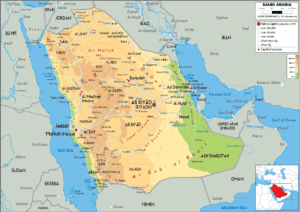
Saudi Arabia is located on the Arabian Peninsula in the Middle East, bordered by the Red Sea to the west, the Arabian Gulf to the east, and the Arabian Sea to the south. It shares land borders with Jordan, Iraq, Kuwait, Qatar, Bahrain, the United Arab Emirates, Oman, and Yemen. The vast majority of the country is characterized by arid desert terrain.
Notable geographical features include the Rub’ al Khali, also known as the Empty Quarter, which is one of the largest continuous sand deserts in the world. The country also has mountainous regions, such as the Asir and Hijaz Mountains in the west.
Climate of Saudi Arabia:
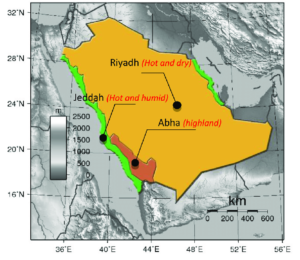
Saudi Arabia experiences a desert climate, characterized by high temperatures and low precipitation. Summers are extremely hot, with daytime temperatures often exceeding 40 degrees Celsius (104 degrees Fahrenheit). Winters are milder but can still be warm, especially in the coastal regions.
Rainfall is generally scarce, and the country relies heavily on desalination and water conservation efforts to meet its water needs. The climate varies slightly between regions, with coastal areas experiencing more moderate temperatures compared to the inland desert regions.
Demographics of Saudi Arabia:
Saudi Arabia has a diverse population, with a majority of the residents being of Arab descent. The official language is Arabic, and Islam is the state religion. The majority of Saudis adhere to Sunni Islam, with a small percentage practicing Shia Islam.
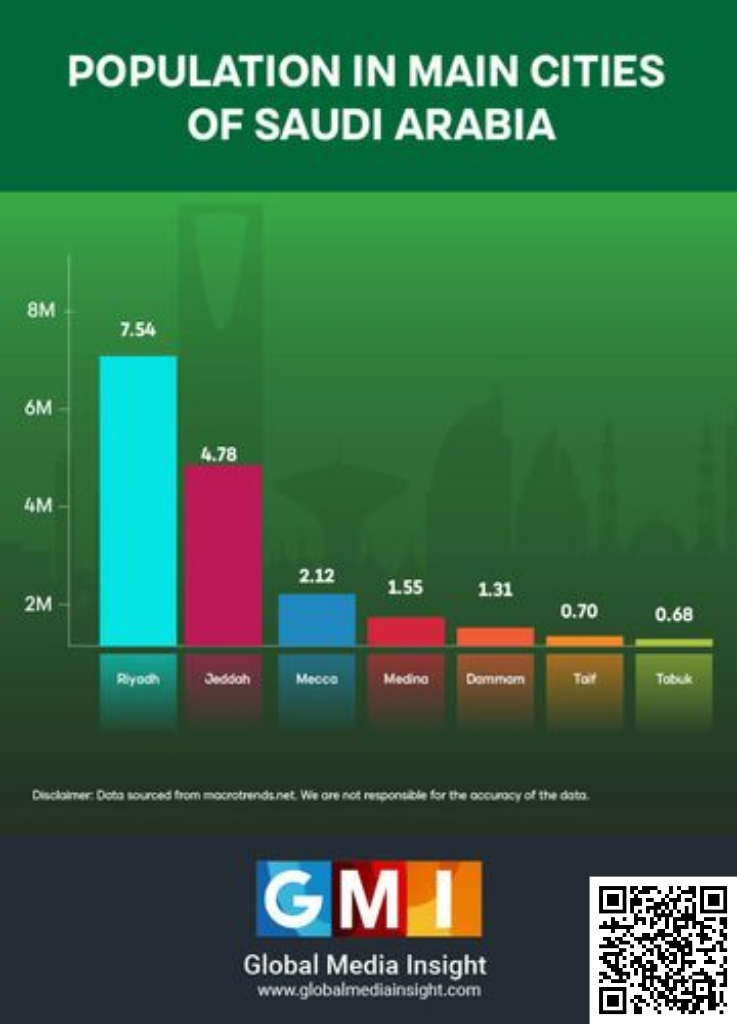
The population has grown significantly in recent decades, partly due to immigration and a high birth rate. Riyadh, the capital city, is the largest city and serves as the political, economic, and cultural hub of the country. Other major cities include Jeddah, Mecca, and Medina.
Saudi Arabia has undergone economic and social changes in recent years, with efforts to diversify the economy and introduce social reforms. These changes are part of the Vision 2030 initiative aimed at modernizing various aspects of Saudi society.
Scan the QR code with your mobile camera. Augmented Relity